Economic Opportunities Assessment & Action Plan for Long Island Innovation Park at Hauppauge

Location
Client
Suffolk County Industrial Development Agency
Services
- Economic Development Policy
- Urban & Regional Planning
Collaborators
- Regional Plan Association
Year
Links
JLP+D and the Regional Plan Association were contracted with Suffolk County Industrial Development Agency to produce a comprehensive economic report for Long Island and develop growth strategies for the Long Island Innovation Park, formerly known as the Hauppauge Industrial Park, a 1,400-acre office and industry hub with more than 1,300 businesses, the largest industrial park in the Northeast.
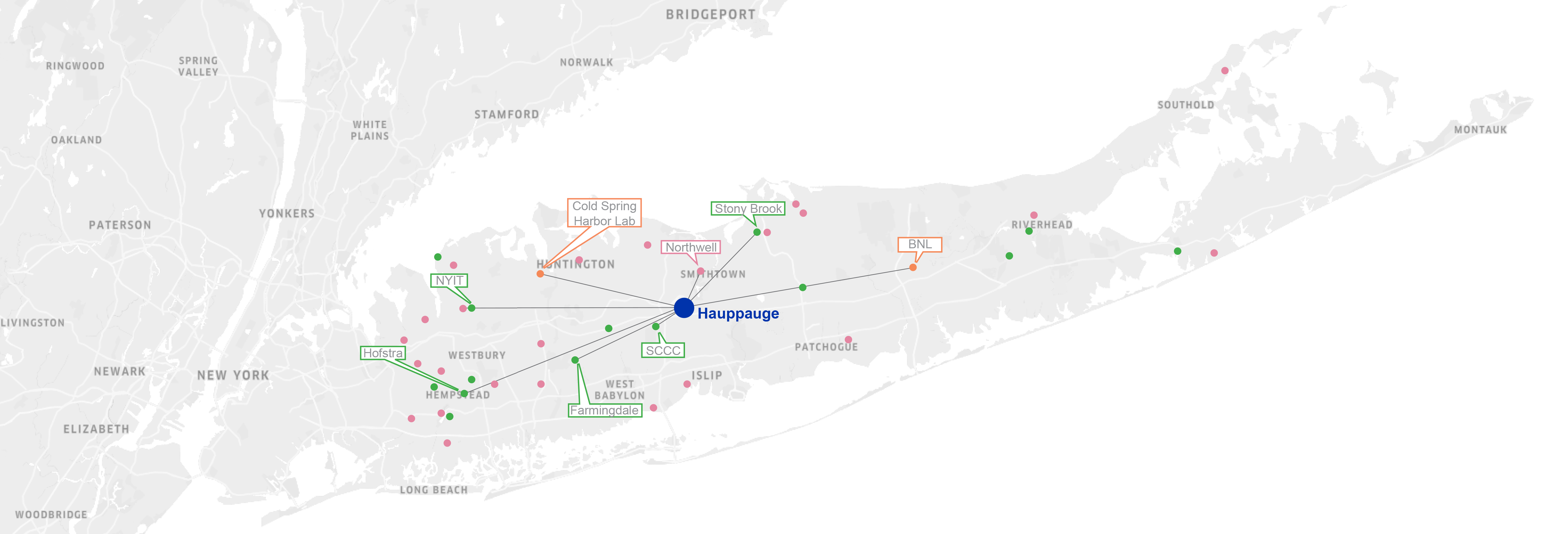
JLP+D utilized a cluster-based approach to analyzing export industries for the region, and assessed the various aspects of local economic development strategies, including workforce development, zoning and regulations, critical infrastructure investment, placemaking and quality of life, and marketing and branding. Combining quantitative analysis with qualitative research, JLP+D summarized major challenges and opportunities for Long Island’s key clusters - including aerospace, biopharmaceuticals, distribution, education, food processing, and IT.
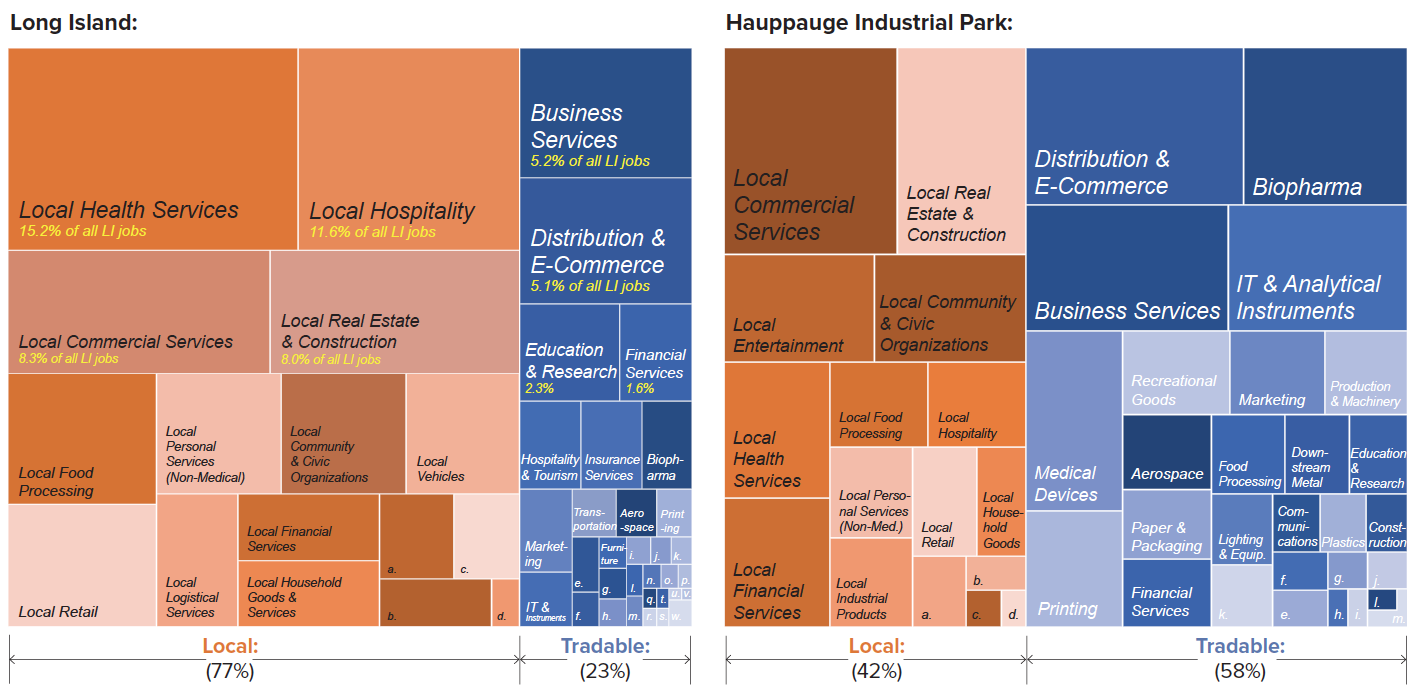

Broad consultation with local experts and active engagement with business and government stakeholders through interviews and meetings ensured the validity of the research. The findings were mapped and visualized in user-friendly formats. JLP+D then recommended five broad economic strategies to strengthen the key clusters on Long Island and in the Park. These strategies are: Facilitate business growth; Attract and retain young and educated workforce; Strengthen training and employment pipeline; Promote innovation and technological progress; Build connections among businesses, governments, and institutions. Together with the Regional Plan Association, JLP+D developed recommendations based focused on actionable project types within Hauppauge Industrial Park, including business and amenity space development, public realm improvement, regulatory framework update, and new management initiatives. The final report provided a detailed implementation plan that includes funding strategies, leadership and governance models, phasing, and policy alignment.


