Placemaking as an Economic Engine for All
As recently as a few decades ago, America’s cities were being drained of residents and businesses. Yet, before the onset of the COVID-19 pandemic, demand for proximity to urban centers was approaching one of the highest points in recent memory. The proliferation of desirable urban ‘places,’ or high-amenity districts that are designed, activated, and managed in a way that cultivates a connection between people and the physical space around them, is among the most compelling explanations for this extraordinary turnaround.
Cities, and the open space assets that typically anchor them, attract concentrations of workers, firms, residents, students, visitors, and capital investment, generating value for and enhancing the economic competitiveness of their host communities. As a result, cities and governments, developers and corporations, and anchor institutions and nonprofits alike are increasingly turning to placemaking as an effective strategy to drive economic growth, productivity, and innovation.
While cities will always face challenges and crises that threaten to reverse the social and economic progress they have made, placemaking will have an important role to play in inclusive strategies to achieve more resilient communities and economies.
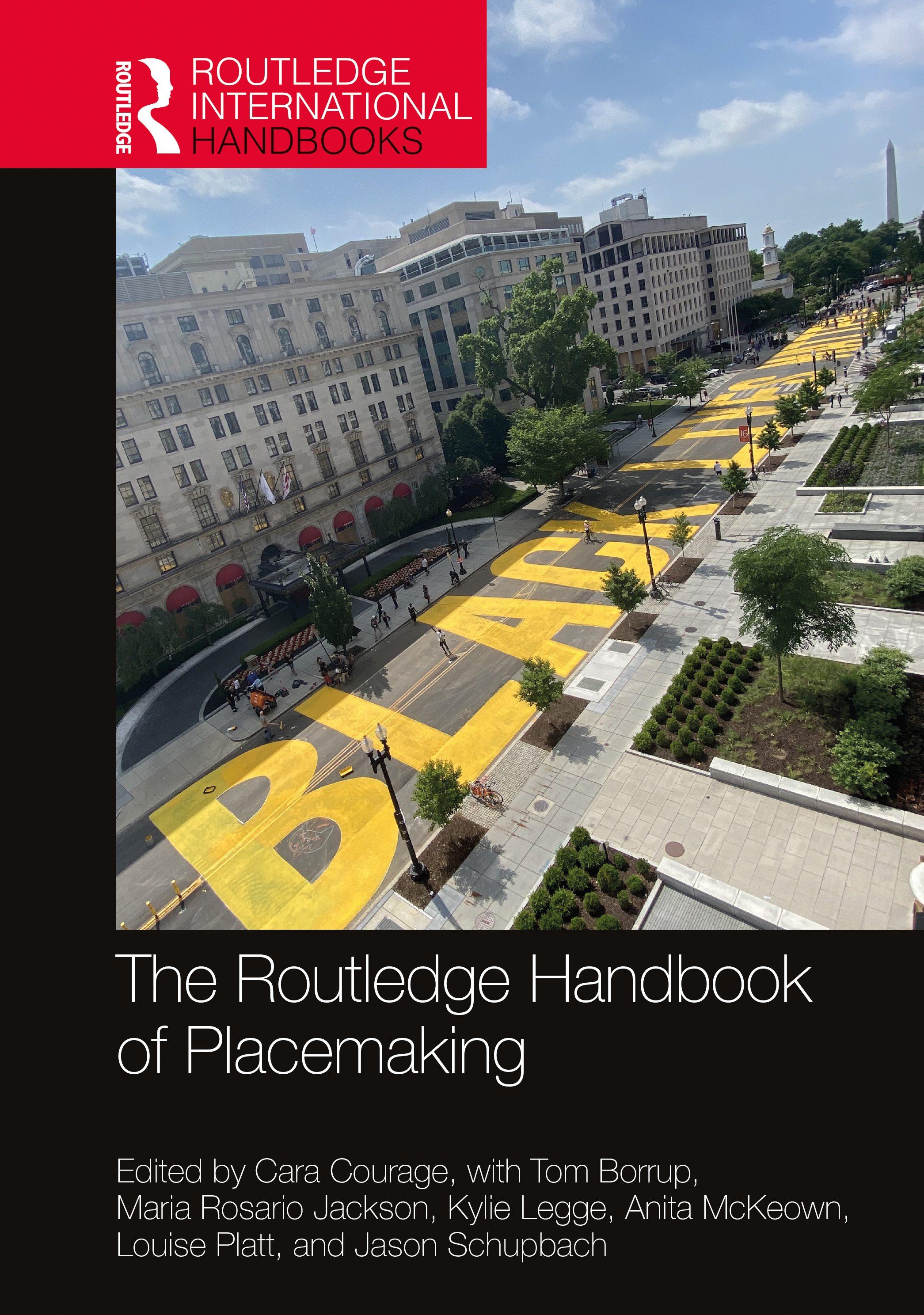
JLP+D President James Lima and Associate Andrew Jones authored a chapter in “The Routledge Handbook of Placemaking”, one of the most comprehensive publications on the emergent field to date. The chapter draws on extensive literature and case studies to explain how “place” drives productivity and innovation for the economy, how parks and open space enhance real estate value, and what kind of preemptive efforts are necessary to keep places that experience value increases as open and accessible.
History has shown that through targeted, partnership-driven investments in place, cities across the United States have achieved a positive turn-around of their social and economic fortunes, transforming previously empty or underutilized swaths of land into amenity-rich districts anchored by inviting, value-generating open spaces. This experience offers lessons for how cities can recover from future crises and resolve persistent challenges through placemaking initiatives that prioritize inclusion, social connectivity, and ingenuity.